What is the issue?
Accountability starts with knowing where every taxpayer dollar goes. Montgomery County’s Office of the Inspector General is responsible for identifying and addressing fraud, waste, abuse, and mismanagement across County government and agencies, including Montgomery County Public Schools. Its published reports document findings involving financial controls, procurement, improper payments, and other areas requiring corrective action.
Esther Wells believes Montgomery County needs stronger financial oversight, greater transparency, and meaningful follow-through when problems are identified. As a CPA, she will bring a disciplined, results-driven approach to protecting taxpayer dollars—strengthening internal controls, demanding accountability for unresolved findings, and ensuring that public funds are spent as intended. Under Esther’s leadership, accountability will not be an afterthought; it will be a fundamental responsibility of government.
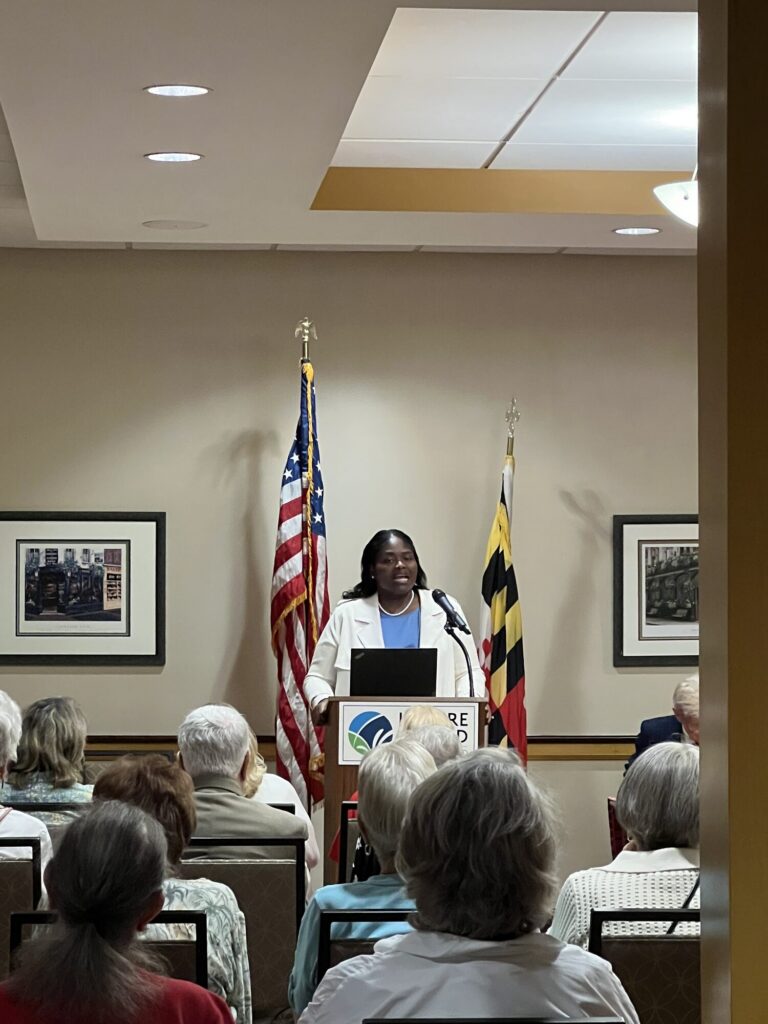
What Accountability Means
- Know where every dollar goes: Ensure taxpayer money is tracked, protected, and spent for its intended purpose.
- Follow the facts: Take Inspector General findings and independent audits seriously and require timely corrective action.
- Strengthen oversight: Improve financial controls and transparency across County government and its agencies.
- Measure results: Tie spending to clear goals and measurable outcomes—not simply bigger budgets.
- Protect taxpayers: Identify waste, prevent improper spending, and pursue funds the County is legally entitled to collect.
- Demand responsibility: When problems are identified, those responsible must be held accountable and corrective action must follow.
- Bring CPA-level discipline: Use her financial expertise to bring greater fiscal discipline, transparency, and stewardship to County government.
Esther’s Vision
Esther Wells will lead with measurable goals, fiscal stewardship, and transparent government. She will create a government centered on affordability, accountability and private sector growth.
As County Executive, her mission is to restore Montgomery County as the regional economic engine. Right now, we are watching employers, entrepreneurs, and high-income residents flee to Fairfax and Howard counties because our local government repeatedly raises taxes on those who stay rather than fostering private-sector growth.
Over her 4-year term, Esther will implement targeted initiatives to boost affordability, lower cash-at closing requirements, and make the dream of homeownership achievable for first-time homebuyers and young adults.
Her vision is for Montgomery County to become the economic engine of the region again, not a county that watches employers, high-income residents, and entrepreneurs choose other jurisdictions while we raise taxes on the people who remain. We have tremendous assets, but we are not operating at our full potential.
How we will achieve this goal
- Classify every dollar: Direct service, overhead, compliance mandate, contractual obligation, grant-supported service, or discretionary program.
- Separate need from affordability: Require agencies, including MCPS, to present both a needs budget and an affordability budget, with a reconciliation between the two.
- Protect priorities: Public safety, public education, and transportation will be Priority 1. Everything else must justify its role against measurable outcomes.
- Reduce overhead: Identify unnecessary administrative layers, duplicative managers, consultants, communications staff, HR liaisons, procurement teams, and compliance functions that can be centralized or shared.
- Eliminate stale programs: Sunset COVID-era programs, temporary initiatives, and non-core activities that no longer match our current needs.
- Use technology and dashboards: Deploy AI tools, data dashboards, workflow automation, and public performance reporting to reduce backlog, waitlists, and manual processing.
- Tie increases to outcomes: Any increase above baseline must be linked to SMART goals: Specific, Measurable, Achievable, Relevant, and Time-bound.
Agency Realignment Opportunities Already Identified
- MCPS role clarification: Refocus MCPS on education and classroom learning; review whether any MCPS services could be realigned with agencies that already provide similar services.
- Human Resources: Review departmental HR specialists and personnel liaisons where the Office of Human Resources already provides centralized support.
- Procurement: Centralize procurement controls, reduce emergency procurement abuse, tighten approval thresholds, and prevent employee-contractor double payment issues.
- Communications and public information: Review department-level public information officers and communications staffing to see where centralized public information support can serve multiple agencies.
- Information technology: Identify duplicative technology platforms, failed pilots, sunk cost systems, and opportunities for shared digital services.
- Public safety operations: Reassess whether sworn officers are performing functions that can be civilianized, regionalized, or handled by specialists so officers can focus on investigations, response times, community policing, and case closure rates.
- Department of Health and Human Services eligibility and documentation: Strengthen controls for rental assistance, food assistance, nonprofit grants, and other benefit programs to reduce fraud, errors, and improper payments while making sure our residents in need are strongly supported. No one should be homeless, and no one in our county should want for food, clothing or shelter. No one.
- Nonprofit grants and procurement: Require performance metrics, documented eligibility, procurement compliance, and annual reporting before renewal.
- Vacant positions: Eliminate or repurpose funded vacant positions unless the agency can demonstrate a direct service need, with public safety prioritized and treated separately.
Video
Part of: Taxes
Because Montgomery County’s trust is too important to lose.